
Browse San Francisco Directory Coverage
San Francisco people directories are kept by several public agencies, schools, and libraries. No single list covers every resident. Government directories identify staff at work, education directories identify public-facing faculty or departments, and filing indexes identify parties to a public record. Historical directories answer a different question: who lived or did business at a place in a given year.
| Directory | Who It Lists | Keeper | Access |
|---|---|---|---|
| SFGov telephone directory | City and county employees | City and County of San Francisco | Online search and agency downloads |
| SFUSD directories | Departments, schools, and published staff | San Francisco Unified School District | Online by department or school |
| USF faculty directory | Faculty by name, school, and subject | University of San Francisco | Free online |
| Records Manager | Grantors, grantees, and recorded parties | Assessor-Recorder | Online from 1990; earlier records in office |
| Business and license lookups | Registrants, entities, and licensed professionals | Local and California agencies | Online search and open data |
| SFPL directory collections | Past residents, occupants, and businesses | San Francisco Public Library | Online, print, and microform |
Choose by relationship. A city agency is the right starting point for a public employee. A school or university directory works for an educator. Recorded documents and business filings can connect a name to a transaction. For a former resident, San Francisco Public Library gives the widest span of named directory years.
San Francisco Government Directory Search
The SFGov telephone directory is the core current-government directory for the consolidated city and county. It supports agency browsing, an alphabetical employee list, name search, phone search, and agency files in CSV or PDF. A result is a work-contact record, not a personnel file. It can show an employee name, agency or department, and telephone number, but not a home address or personal email.
| Employee name | Last and first name as published |
|---|---|
| Agency | City or county department |
| Telephone | Published office number, sometimes with formatting variants |
| Not included | Home address, private email, and sensitive personnel details |
The SFGov employee download page shows how directory files are grouped by agency.
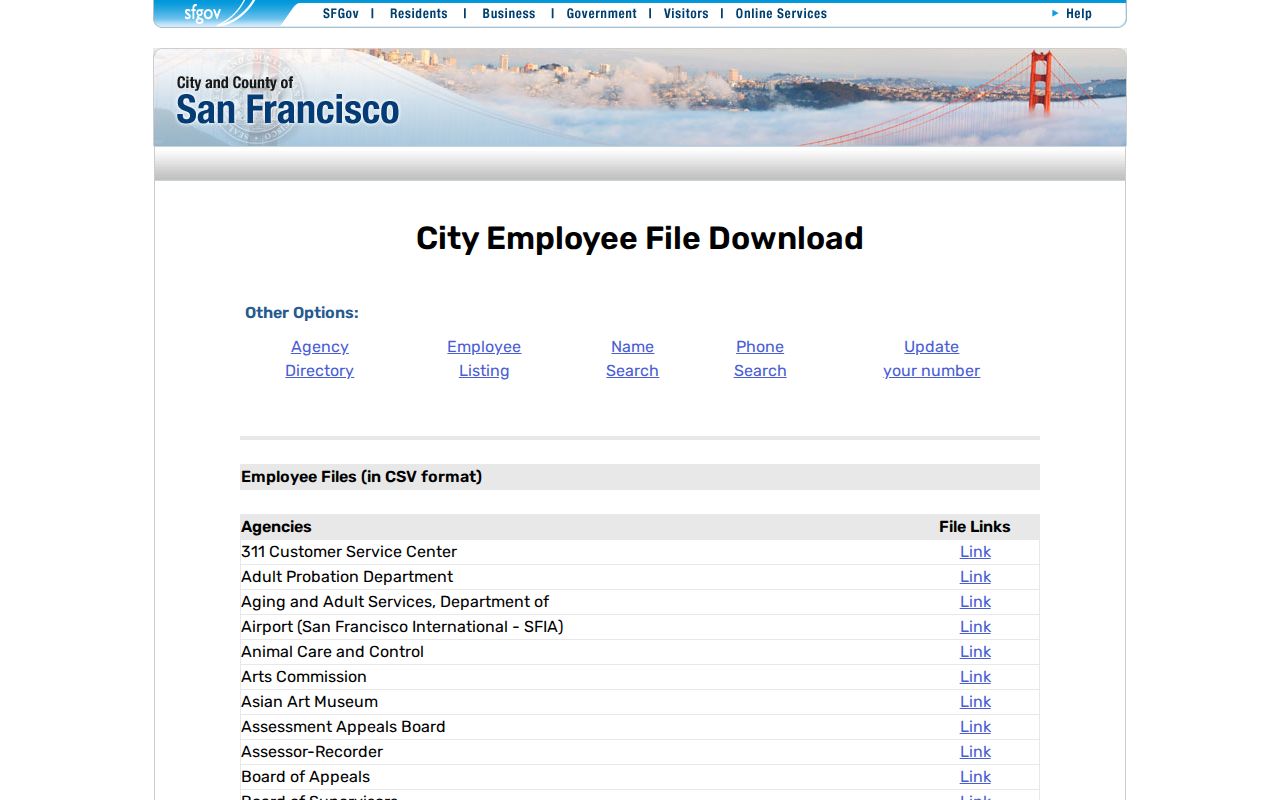
Those agency files are useful when spelling is uncertain or a full department roster is more helpful than a single-name query. SF Planning and DBI also publish separate staff directories with roles, divisions, phones, and official email details. If a person is absent, call the department's main line before assuming the person has no current city role.
San Francisco Education Directory Search
Education listings are spread across institutions. SFUSD publishes a departmental directory and separate school-level faculty or staff pages. City College of San Francisco offers employee and department, office, or service tabs. The University of San Francisco maintains a faculty directory that can be narrowed by a name, keyword, or school. These sources publish institutional roles and work contacts, not restricted student records.
The SFUSD departmental directory routes a search to district offices and school finder resources.
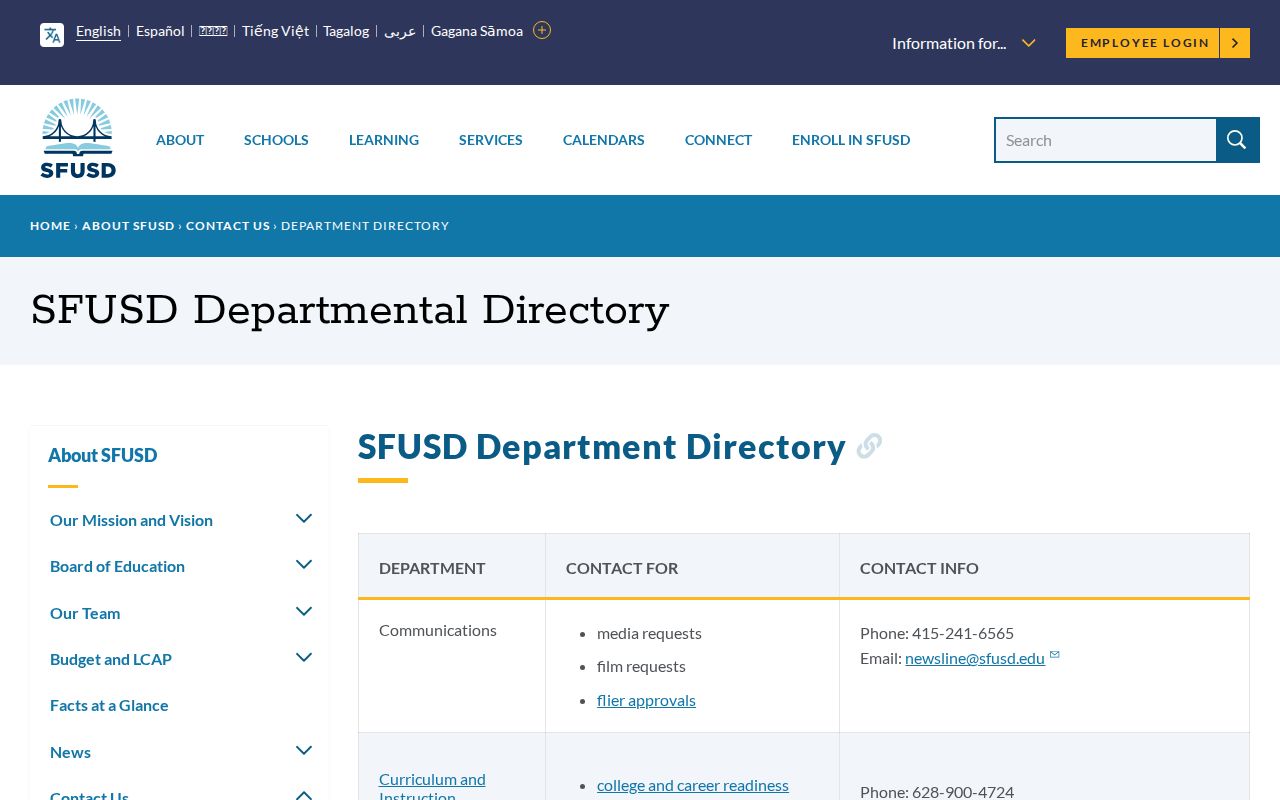
Because SFUSD does not offer one universal staff search, check both the relevant department and the individual school's published page. The University of San Francisco faculty directory provides a real filter-based search.

Its keyword and school filters help distinguish people with similar names by academic unit.
| Search Field | Input | Required | How It Narrows Results |
|---|---|---|---|
| Name or keyword | Text | No | Searches names and faculty subjects |
| School | Filter | No | Limits results to a USF school |
| Faculty entry | Result link | Not applicable | Shows name and available school, department, title, or profile details |
San Francisco Records Name Directories
Some public-record indexes act like directories even though that is not their main purpose. The Assessor-Recorder's Records Manager lists grantors and grantees, meaning parties who transfer or receive an interest in a recorded instrument. It can connect a name to a document type, date, number, or block and lot. Online coverage begins in 1990. Earlier recorded documents require a search at City Hall or a historical collection.
Court queries also work as party-name indexes, but sealed or confidential matters will not appear like ordinary cases. The voter roll is still more restricted. It is not an open San Francisco resident directory and may be obtained only for purposes allowed by California election law. The details of record access and request channels belong with San Francisco public records access.
San Francisco Business Directory Lookup
Business directories form a layered trail. San Francisco's registered business dataset includes ownership name, DBA name, street address, start and end dates, and account or location identifiers. The County Clerk's Fictitious Business Name search can be queried by trade name, registrant, corporation or LLC name, file number, date, or confirmation number. Since an FBN statement expires after five years, renewals and abandoned filings help establish a timeline.
California's DCA License Search adds individual license status, expiration, and discipline flags for regulated fields. Other official directories cover attorneys, contractors, real estate licensees, and educator credentials. Bizfile supplies the statewide entity layer, while the UCC search accepts debtor, secured party, or file number.
The California Secretary of State bizfile search displays the official route to entity records and available filing copies.
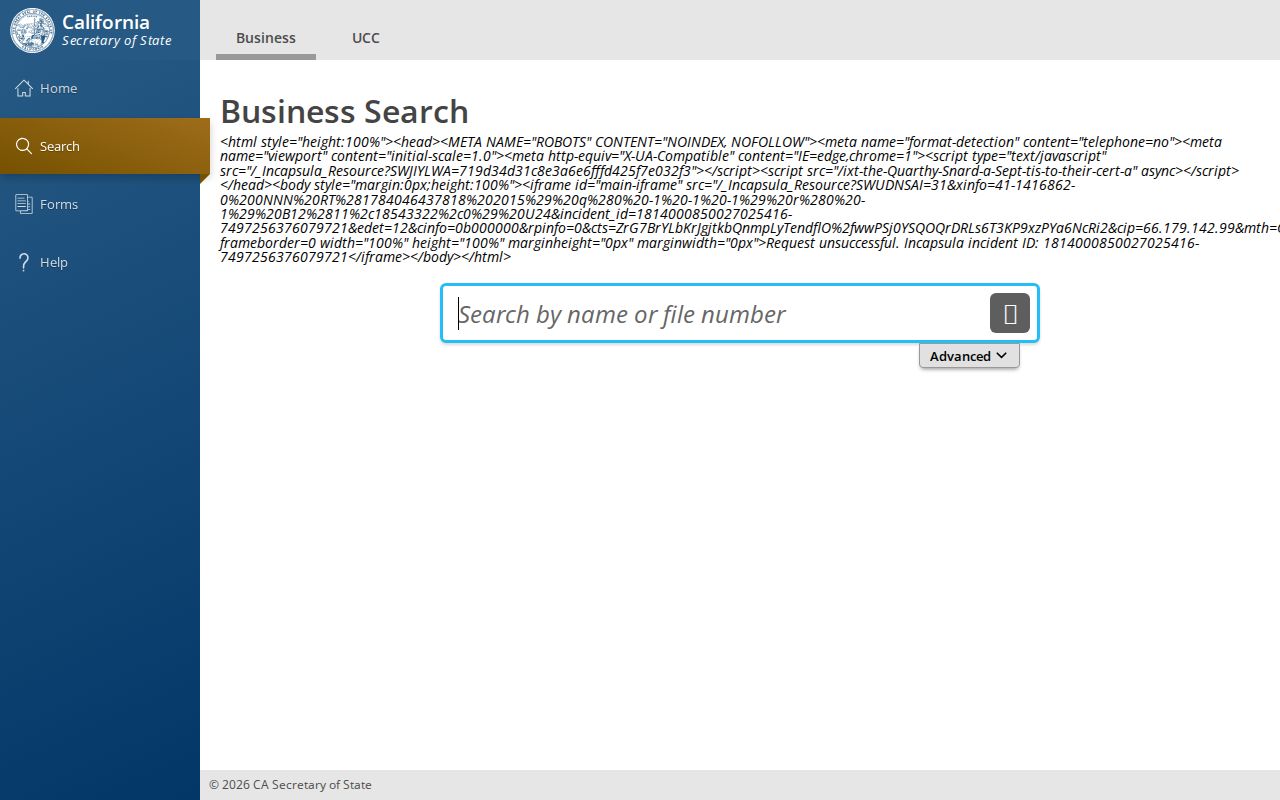
Compare an entity result with local registration or FBN data before treating two similar business names as the same organization.
San Francisco Property Directory Geography
San Francisco property systems are strongest when the starting fact is an address. The Property Information Map can turn an address into the city's block and lot identifier, assessor summary, permits, complaints, planning applications, zoning, historic data, and neighborhood context. That block and lot is the bridge among Planning, assessor, permit, tax, and recorder records. It is more reliable than using a ZIP code to define local geography.
The assessor portal accepts an address or block and lot, but broad owner-name browsing is not its main public mode. Ownership detail may require official data or copy channels. For a name-first inquiry, Records Manager is more direct because it searches recorded parties. For an address-first inquiry, PIM and DBI reveal applicants, agents, contractors, and owner representatives tied to a permit history.
- Block and lot
- San Francisco's parcel identifier across property and recorder systems.
- Situs address
- The physical location of the property.
- Mailing address
- The destination for tax or official correspondence, which may differ from the property.
- Reverse directory
- A directory arranged by street address rather than by surname.
Note: Condominiums, tenancy-in-common interests, and mixed-use buildings may require an exact unit plus the full block and lot.
San Francisco Library Directory Years
San Francisco Public Library documents a rare span of dated directory holdings. The collection supports both name-to-address and address-to-occupant research, and its format notes tell researchers what can be checked from home and what requires a library visit.
City directories
1850-1960 on microform, 1875-1982 in print, and 1850-1982 online.
Reverse directories
1953-current in print for address-to-occupant research.
Phone books
1899-1992 on microform and 1921-current in print.
The SFPL genealogy resources inventory also points to newspapers, obituary help, voter registers, funeral home records, and other sources.
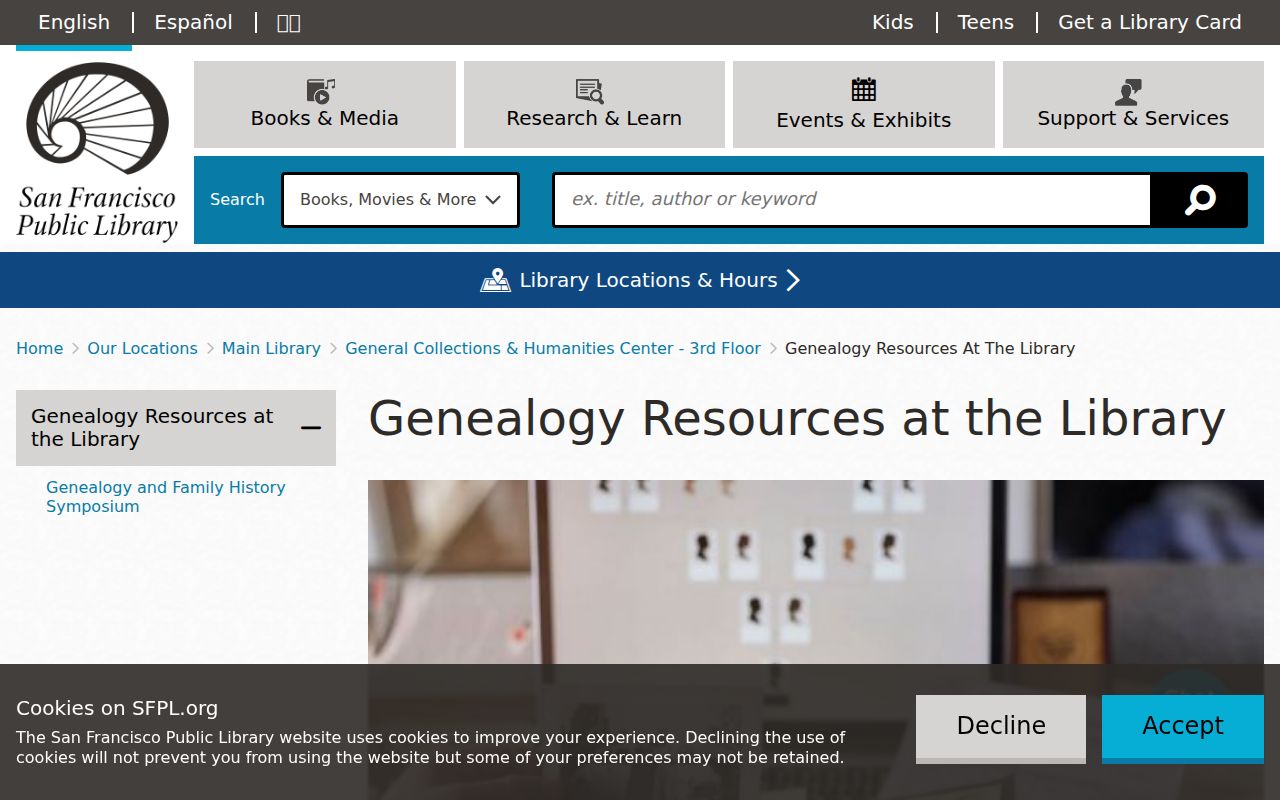
The exact ranges make it possible to choose the right format before traveling. Library card or in-building access may be required for licensed newspaper and genealogy databases.
Trace Historical San Francisco Directories
Historical San Francisco directories are annual or near-annual snapshots. A city directory may show a resident or head of household, occupation, business affiliation, and street address. Some editions add a spouse or widow notation. A reverse directory starts from the address and identifies the occupant or business. Phone books add subscriber and business listings across a different run of years.
- 1850 onward: City directories begin the long SFPL coverage span.
- 1906: The earthquake and fire disrupted records, making directories, newspapers, insurance materials, and reconstructed sources especially important.
- 1953 onward: Print reverse directories permit address-first historical lookup.
- 1990 onward: Recorded documents become available through the online Records Manager.
For family history, compare one person across adjacent directory years. Then use local newspapers for obituaries, marriage notices, probate notices, and neighborhood events. SFPL notes that the 1850 San Francisco federal census was lost or destroyed, which makes period directories valuable as a census substitute.
San Francisco Archive Directory Trails
The San Francisco History Center is both a local-history collection and the archives for the City and County. It holds books, newspapers, magazines, photographs, maps, posters, manuscripts, archives, and ephemera. Records with long-term value may move there after a city department no longer keeps them on its current website.
The San Francisco History Center publishes its collection scope and reference contact at the Main Library.
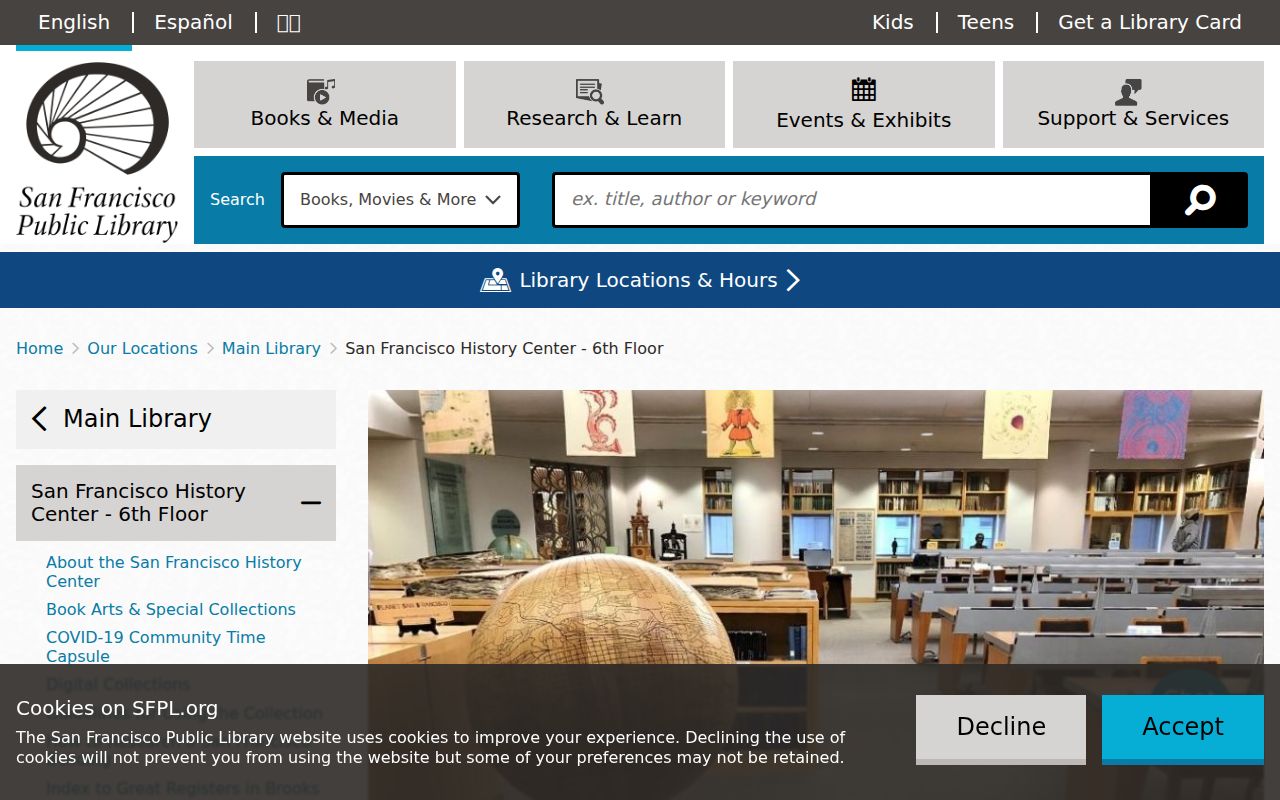
That local archive can connect a directory name to neighborhood photos, maps, manuscripts, or municipal records.
NARA San Francisco in San Bruno adds federal court, immigration, military, maritime, Angel Island, Alcatraz, and agency records. Its holdings exceed 75,000 cubic feet and date mainly from about 1850 through the 1980s. Chinese American family research may lead to exclusion-era case files and immigration interviews, while California State Archives materials may add probate, naturalization, vital, land, military, prison, or professional files.
San Francisco Directory Privacy Limits
Official directories publish only what their function permits. A staff listing gives work contact details. A deed index identifies recorded parties but may redact sensitive data. An assessor lookup may limit owner information online. Court indexes omit sealed or confidential cases, and voter data is restricted by purpose and excludes protected information. Student files, private personnel details, and confidential addresses do not become public merely because an institution has a searchable directory.
Names also need context. Initials, married names, business aliases, Chinese romanization variants, Spanish compound surnames, and repeated family names can create false matches. Verify a result against its keeper, date, agency, school, address, business number, license, or document number. For historical work, move across adjacent directory years instead of relying on one isolated entry.
Note: Commercial listings may merge old data, while an official directory is narrower but identifies its keeper, purpose, and access setting.